




Most people think of sleep as a way to recover from a long day. But sleep does far more than help you feel rested. Every night, your brain enters a highly active state that supports memory formation, emotional regulation, cellular repair, hormone production and long-term cognitive health.
Yet millions of adults routinely sacrifice sleep in favor of work, family obligations, screen time or social activities. According to the Centers for Disease Control and Prevention (CDC), more than one-third of adults in the United States regularly fail to get enough sleep.[1]
The consequences extend beyond next-day fatigue. Research shows that chronic sleep deprivation can impair attention, decision-making, mood, metabolic health and even increase the risk of neurodegenerative diseases later in life.[2,3]
For men in particular, poor sleep can also contribute to reduced testosterone production, lower energy levels, decreased motivation and diminished overall well-being.[4]
The good news? Improving sleep quality may be one of the most effective ways to support both immediate performance and long-term brain health.
How Sleep Supports Brain Function
While you sleep, your brain isn’t shutting down—it is performing critical maintenance.
Researchers have discovered that sleep plays a major role in:
- Consolidating memories and learning
- Supporting problem-solving and creativity
- Regulating emotions
- Clearing metabolic waste from the brain
- Maintaining healthy neural connections
- Supporting cognitive performance and focus[2,5]
One of the most important discoveries in neuroscience is the role of the glymphatic system, often referred to as the brain’s “waste clearance system.” During sleep, cerebrospinal fluid circulates through the brain, helping remove proteins and metabolic byproducts that accumulate during waking hours.[6]
Without adequate sleep, this cleanup process becomes less efficient, potentially contributing to long-term cognitive decline.
The Link Between Poor Sleep and Cognitive Decline
Sleep is increasingly recognized as a critical pillar of healthy aging.
Multiple studies have found associations between chronic sleep disruption and increased risk of cognitive impairment, Alzheimer’s disease and other forms of dementia.[3,7]
Researchers believe several factors may contribute:
- Increased accumulation of beta-amyloid proteins
- Elevated inflammation
- Oxidative stress
- Impaired glucose metabolism
- Hormonal imbalances
- Reduced glymphatic clearance[6,7]
Even in younger adults, poor sleep can negatively affect concentration, reaction time, memory retention and executive function.[8]
For professionals, athletes and high performers, sleep may be one of the most overlooked factors influencing daily mental performance.
Sleep and Hormones: An Often-Overlooked Connection
Hormones and sleep share a powerful two-way relationship.
Sleep influences the production of several key hormones, including:
- Testosterone
- Growth hormone
- Cortisol
- Melatonin
- Insulin[4,9]
In men, testosterone production largely occurs during sleep. Research shows that sleep restriction can significantly reduce testosterone levels, potentially affecting energy, mood, muscle maintenance and sexual health.[4]
Poor sleep can also elevate cortisol, the body’s primary stress hormone. Chronically elevated cortisol may contribute to fatigue, increased abdominal fat storage, reduced resilience and impaired cognitive function.[10]
This creates a cycle where poor sleep increases stress, and stress further disrupts sleep quality.
Breaking this cycle often requires addressing both sleep habits and the biological systems that influence recovery.
NAD+ and Cellular Energy: A Key Player in Healthy Aging
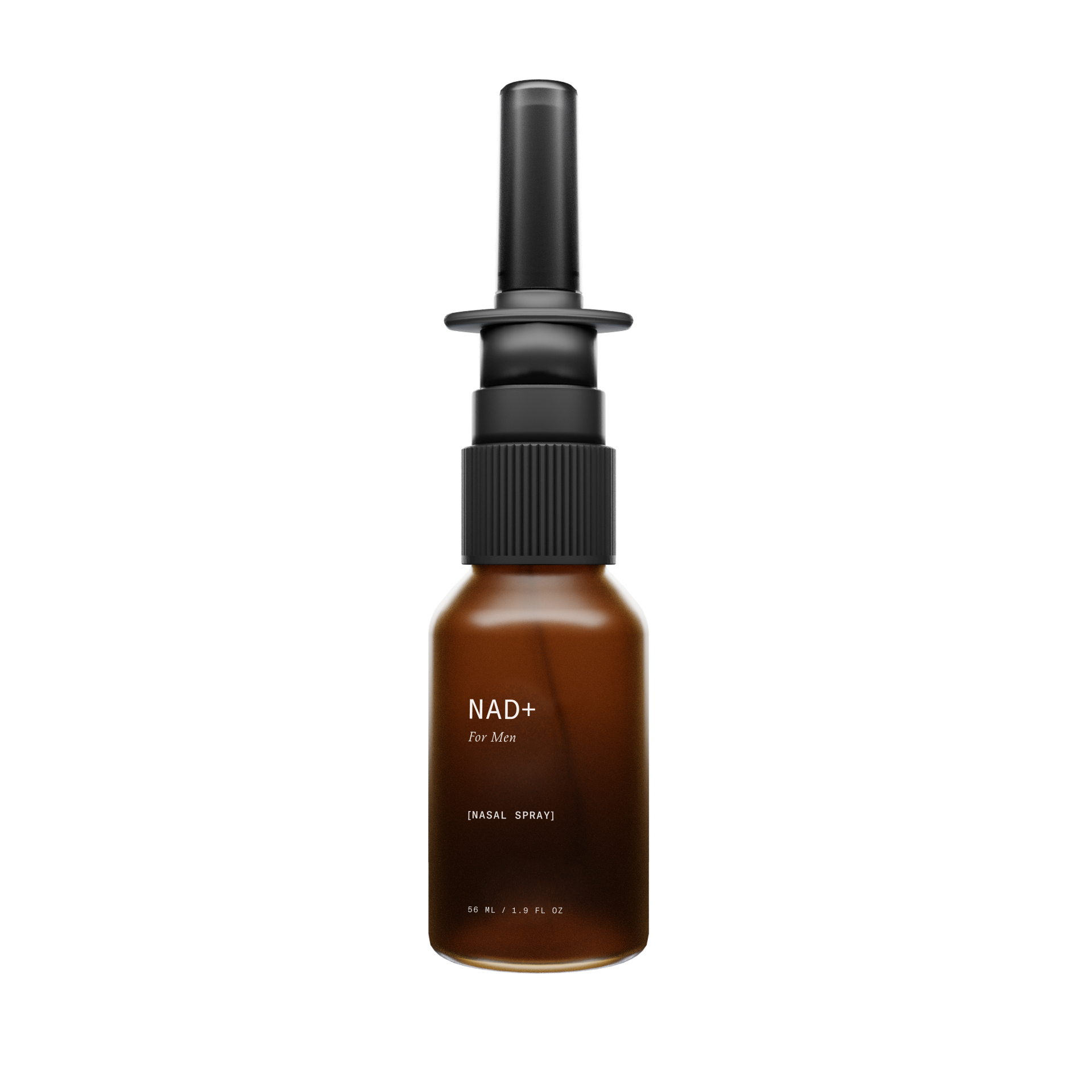
One of the most exciting areas of longevity research involves NAD+ (nicotinamide adenine dinucleotide), a coenzyme found in every cell of the body.
NAD+ is essential for:
- Cellular energy production
- DNA repair
- Mitochondrial function
- Healthy aging processes
- Cognitive function[11,12]
Unfortunately, NAD+ levels naturally decline with age.[13]
Researchers have found that reduced NAD+ availability may contribute to age-related changes in metabolism, energy production and neurological function.[12]
Emerging evidence suggests that supporting healthy NAD+ levels may help promote cellular resilience and support healthy brain aging.[11,12]
While sleep remains foundational, optimizing cellular health may offer additional support for long-term cognitive wellness.
Stress, Mood and Mental Performance
Many people experience the effects of poor sleep first through changes in mood.
After just one night of insufficient sleep, individuals may experience:
- Increased irritability
- Reduced stress tolerance
- Anxiety symptoms
- Lower motivation
- Difficulty concentrating[14]
Brain imaging studies show that sleep deprivation can heighten emotional reactivity while reducing activity in regions responsible for emotional regulation.[15]
This may explain why everyday stressors often feel more overwhelming after a poor night’s sleep.
Over time, chronic sleep disruption has been linked to an increased risk of depression and anxiety disorders.[16]
Supporting emotional well-being therefore requires more than simply managing stress—it requires prioritizing sleep quality and recovery.
Lifestyle Habits That Improve Sleep and Brain Health
Fortunately, small changes can produce meaningful improvements.
Consider incorporating these evidence-based habits:
Maintain a Consistent Sleep Schedule
Going to bed and waking up at similar times each day helps regulate circadian rhythms and improve sleep quality.[17]
Get Morning Sunlight
Exposure to natural light shortly after waking supports healthy melatonin production and circadian alignment.[18]
Limit Evening Blue Light
Reducing screen exposure before bedtime may help preserve natural melatonin release.[19]
Exercise Regularly
Physical activity has been shown to improve sleep quality and support cognitive health across the lifespan.[20]
Prioritize Stress Management
Meditation, breathwork and mindfulness practices may reduce stress and support better sleep outcomes.[21]
Support Nutritional Foundations
Adequate intake of nutrients involved in neurotransmitter production and nervous system function may contribute to better sleep and mood regulation.[22]
The Bottom Line
Sleep is not a luxury—it’s a biological necessity for brain health, cognitive performance and healthy aging.
Every night, your brain works to repair, reorganize and protect itself. When sleep becomes consistently compromised, those processes suffer, potentially affecting everything from mood and memory to long-term neurological health.
By prioritizing quality sleep, managing stress and supporting healthy cellular function, you can take meaningful steps toward protecting your brain and optimizing performance for years to come.
Whether your goal is sharper focus, better recovery, improved mood or long-term cognitive wellness, sleep remains one of the most powerful tools available.
References
- Centers for Disease Control and Prevention. Sleep and Sleep Disorders. https://www.cdc.gov/sleep
- Rasch B, Born J. About sleep’s role in memory. Physiological Reviews. 2013;93(2):681-766. https://doi.org/10.1152/physrev.00032.2012
- Pase MP, Himali JJ, Grima NA, et al. Sleep architecture and the risk of incident dementia. Neurology. 2017;89(12):1244-1250. https://doi.org/10.1212/WNL.0000000000004373
- Leproult R, Van Cauter E. Effect of 1 week of sleep restriction on testosterone levels in young healthy men. JAMA. 2011;305(21):2173-2174. https://jamanetwork.com/journals/jama/fullarticle/900290
- Walker MP. Why We Sleep. Scribner; 2017.
- Xie L, Kang H, Xu Q, et al. Sleep drives metabolite clearance from the adult brain. Science. 2013;342(6156):373-377. https://doi.org/10.1126/science.1241224
- Ju YES, Lucey BP, Holtzman DM. Sleep and Alzheimer disease pathology. Nature Reviews Neurology. 2014;10(2):115-119. https://doi.org/10.1038/nrneurol.2013.269
- Lim J, Dinges DF. A meta-analysis of the impact of short-term sleep deprivation on cognitive variables. Psychological Bulletin. 2010;136(3):375-389. https://doi.org/10.1037/a0018883
- Van Cauter E, Spiegel K. Sleep as a mediator of the relationship between socioeconomic status and health. Annals of the New York Academy of Sciences. 1999;896:254-261.
- Buckley TM, Schatzberg AF. On the interactions of the HPA axis and sleep. Sleep Medicine Reviews. 2005;9(3):211-224. https://doi.org/10.1016/j.smrv.2004.11.002
- Covarrubias AJ, Perrone R, Grozio A, Verdin E. NAD+ metabolism and its roles in cellular processes. Nature Reviews Molecular Cell Biology. 2021;22:119-141. https://doi.org/10.1038/s41580-020-00313-x
- Verdin E. NAD+ in aging, metabolism and neurodegeneration. Science. 2015;350(6265):1208-1213. https://doi.org/10.1126/science.aac4854
- Massudi H, Grant R, Braidy N, et al. Age-associated changes in oxidative stress and NAD+ metabolism. PLOS ONE. 2012;7(4):e42357. https://doi.org/10.1371/journal.pone.0042357
- Medic G, Wille M, Hemels MEH. Short- and long-term health consequences of sleep disruption. Nature and Science of Sleep. 2017;9:151-161. https://doi.org/10.2147/NSS.S134864
- Yoo SS, Gujar N, Hu P, et al. The human emotional brain without sleep. Current Biology. 2007;17(20):R877-R878. https://doi.org/10.1016/j.cub.2007.08.007
- Baglioni C, Battagliese G, Feige B, et al. Insomnia as a predictor of depression. Journal of Affective Disorders. 2011;135(1-3):10-19. https://doi.org/10.1016/j.jad.2011.01.011
- Phillips AJK, Clerx WM, O’Brien CS, et al. Irregular sleep schedules and health outcomes. Scientific Reports. 2017;7:3216. https://doi.org/10.1038/s41598-017-03171-4
- Wright KP Jr, McHill AW, Birks BR, et al. Entrainment of the human circadian clock to natural light-dark cycles. Current Biology. 2013;23(16):1554-1558. https://doi.org/10.1016/j.cub.2013.06.039
- Chang AM, Aeschbach D, Duffy JF, Czeisler CA. Evening use of light-emitting devices impacts sleep. PNAS. 2015;112(4):1232-1237. https://doi.org/10.1073/pnas.1418490112
- Erickson KI, Hillman C, Stillman CM, et al. Physical activity, cognition and brain outcomes. Medicine & Science in Sports & Exercise. 2019;51(6):1242-1251. https://doi.org/10.1249/MSS.0000000000001936
- Rusch HL, Rosario M, Levison LM, et al. The effect of mindfulness meditation on sleep quality. Annals of the New York Academy of Sciences. 2019;1445(1):5-16. https://doi.org/10.1111/nyas.13996
- Benton D. The influence of dietary status on cognitive performance. Molecular Nutrition & Food Research. 2010;54(4):457-470. https://doi.org/10.1002/mnfr.200900158